SE Ranking's rank tracker tool is a popular choice today to accurately monitor keyword positions for multiple website projects. It's a super versatile and accurate tracker tool.
Reviewed November 4, 2026 SE Ranking’s rank tracker is a cloud keyword position tool for multi-project SEO. This page covers when it fits and how plan keyword caps affect tracking.
SE Ranking’s rank tracker is a cloud keyword position tool for multi-project SEO. This page covers caps, reports, local checks, and when a specialist tracker is a better buy.
Reviewed September 2026 for current Core / Growth pricing (aligned with our pricing guide).
In this post, we share some ways you can use SE Ranking's rank tracker to gain additional keyword and competitor insights and improve your SEO strategy in 2026.
BoostPlanner is reader-supported. If you buy through a link on my site, I may earn an affiliate commission.
Ways to Use SE Ranking's Rank Tracker
Here are some of the helpful things you can do with SE Ranking's rank tracker tool:
Identify Competing Domains Based On Tracked Keywords
Based on the keywords you add to the rank tracker, SE Ranking gives you a list of competitor domains. You can then use SE Ranking's competitive research tools to:
- Identify each domain's keyword rankings, estimated monthly traffic from each ranking, top traffic-driving pages, and their backlink data.
- Check these sites for new keywords to target and add to your rank tracker.

Track Keyword Rankings for Multiple Search Engines
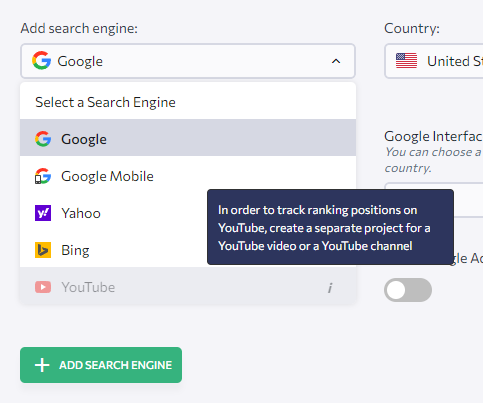
SE Ranking's rank tracker provides functionality to track keyword positions on:
- Google desktop search results
- Google mobile search results
- Google local pack results (section in local search results)
- Google Maps search results
- Bing, Yahoo (powered by Bing)
- YouTube (requires separate SE Ranking Project for YouTube video or channel)
- Track the position of any Google Ads you're currently running.
Track Keyword Rankings for Multiple Locations
You can track keyword rankings for multiple locations within a single project to:
- Quickly analyze keyword position changes for each location you're tracking.
- Check the page URLs that are ranking for each location ad keyword.
- Detect when a page URL is ranking for multiple keywords or locations.
- Detect when a page is competing with another one of your pages for a keyword ranking (avoid keyword cannibalization issues).
Compare Your Rankings With Competitors Side-By-Side
Add up to 5, 10, or 20 competitors per website project (depending on the plan) and track their keyword ranking changes over time and side-by-side.
Here's an example of comparing keyword rankings with competing domains:
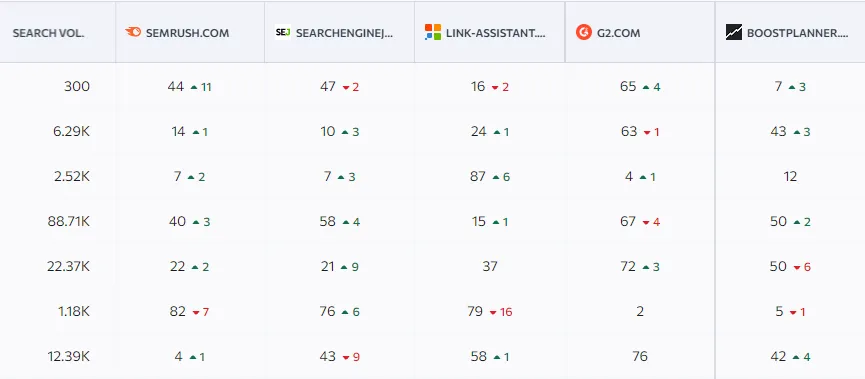
You can filter keyword positions by top 1, 3, 5, 10, 30, and 100 or set a specific range.
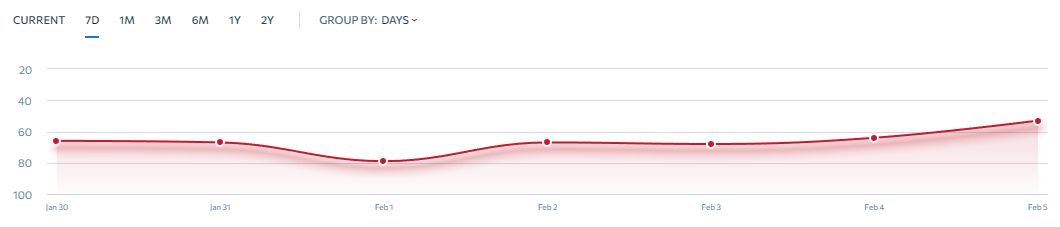
Get Quick Single Keyword & Page Ranking Trends
- Detect the largest ranking jumps and drops to inform your optimization strategy.
- Analyze top keyword rankings as groups or individually in the provided list view.
- View an individual ranking trend chart for each tracked keyword.
- View top pages based on their average keyword positions, including pages that have jumped and dropped in average position the most for the chosen time period.
Compare Your Tracked Keywords in Several Ways
You can use SE Ranking's rank checker to:
- Compare ranking changes between two periods, two dates, or several specific dates.
- Check and compare rankings for today, yesterday, last week, last month, past 7 days, past 30 days, past 6 months, and past year.
- Keyword ranking position data is saved for up to 7 years in the rank tracker.
See Added/Removed Keywords & Google Updates in Chart
Under Rankings -> Detailed in SE Ranking's left sidebar menu, you can see the history of adding and removing keywords to the rank tracker alongside major Google updates.

Connect Google Analytics to View Traffic With Keywords
You can connect your Google Analytics account to SE Ranking. This can help you:
- Save time by checking site traffic trends and keywords in one place.
- See your sites' week, month, 3-month, and 6-month traffic trends in one chart.
- Create website groups to segment keywords and traffic for more granular data.
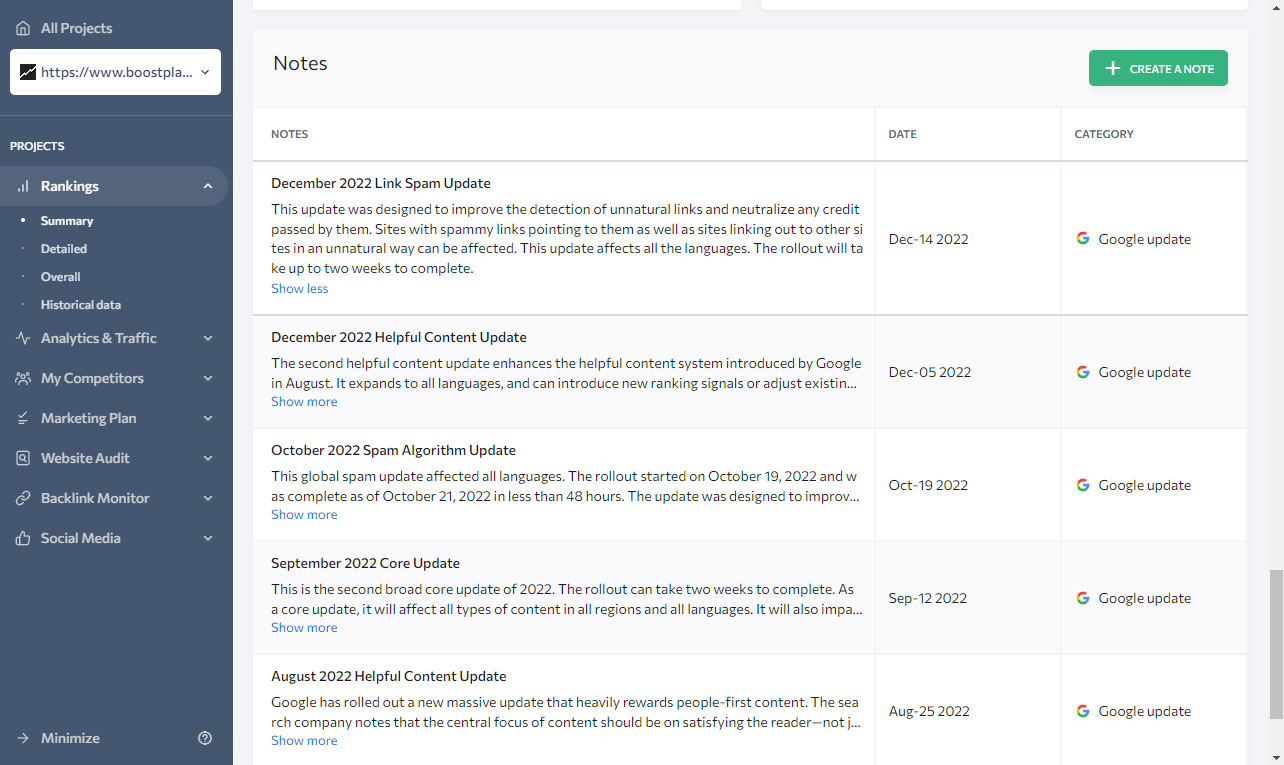
See Google Updates Inside The Rank Tracker
Stay informed of the latest major Google updates on the rank tracker overview page.
When SE Ranking’s rank tracker fits
Reviewed September 23, 2026. Use SE Ranking’s rank tracker when you need ongoing cloud checks across projects, not a one-off desktop crawl:
- Multi-site / multi-client tracking with shared reporting.
- Local + national SERPs where device and location settings matter.
- Keyword caps that match your plan: Core tracks up to 2,000 keywords/day; Growth up to 5,000/day on current public cards (confirm on SE Ranking pricing).
- Trial first: 14 days, no credit card; trial keyword limits are lower than paid Core/Growth, so test your real money-term list size.
Who SE Ranking’s rank tracker is for (and who should look elsewhere)
SE Ranking’s cloud rank tracker fits teams that want multi-location checks, shared projects, and reporting in the same suite. It is less ideal if you only need a single-site desktop crawler or enterprise-only share-of-voice theater.
- Good fit: agencies juggling several client projects, in-house teams that already use SE Ranking for research or audits, and buyers who want a 14-day trial before locking Core/Growth caps.
- Check carefully: keyword caps on your plan, local pack needs, and how ranking reports export for clients.
- Compare alternatives: AccuRanker-style specialists or suite trackers on best rank tracking software when daily accuracy at huge scale is the only job.
Pricing and trial details change. Confirm live SE Ranking plan cards before you promise a client volume. For suite vs specialist stacks, see Frankenstack vs one SEO suite.
SE Ranking tracker vs specialist rank trackers
Pick SE Ranking when the tracker is part of a broader suite workflow. Pick a specialist when daily accuracy at huge keyword scale is the only job.
- Choose SE Ranking if you already research, audit, and report in the same platform and want shared projects.
- Choose a specialist (see the rank tracking software hub) when you need maximum daily volume, share-of-voice theater, or tracker-only pricing.
- Hybrid: specialist tracker plus SE Ranking for research/audits. That Frankenstack only pays off if someone owns the sync.
For the suite-versus-tools decision, read Frankenstack vs SEO suite. For cadence design after you buy, use the keyword rank tracking how-to.
Ranking reports, local checks, and what to verify in week one
Position grids look fine in demos. Client work fails when exports and local settings are messy. Run this week-one checklist on a real project.
- Shareable ranking reports: branded PDF or link with date range, device, and location labeled so a client does not misread a national rank as local.
- Keyword groups: money terms vs brand vs competitors without rebuilding the view each Monday.
- Local and device splits: city/ZIP targeting and mobile vs desktop when map pack or device mix matters.
- Change callouts: winners, losers, and new top-10 entries so the report answers what moved.
- GSC cross-check: note queries with impressions the tracker never saw. Process tips live on keyword rank tracking cadence.
If you mainly need white-label portals and narrative PDFs for the whole SEO story, compare SEO reporting software after the tracker is locked. Keep this page for SE Ranking’s position product.
Keyword caps that decide if SE Ranking’s tracker fits
Cloud trackers fail quietly when you hit plan caps mid-month. Check daily keyword capacity before you migrate a client book.
- Core: about 2,000 keywords tracked per day, plus 25 AI prompts a day on the current card.
- Growth: about 5,000 keywords tracked per day, with more projects and seats. The current Growth card also lists 25 AI prompts a day, the same cap as Core.
- Trial: 14 days, no card, with starter limits (officially around 750 keywords/day). Do not treat the trial as full paid capacity.
- Add-ons: Agency Pack and other modules can change seat/client math; confirm the live subscription page before you quote a retainer.
Reviewed October 24, 2026 against SE Ranking’s published plan framing. Prices and limits move; verify official subscription cards before you buy. For suite pricing context on BoostPlanner, see SE Ranking pricing.
Common SE Ranking rank tracker mistakes
These mistakes burn keyword caps and trust faster than a bad SERP day.
- Tracking every research keyword daily: research lists belong in research tools, not the daily tracker budget.
- Mixing local and national in one unlabeled group: clients will misread map-pack volatility as sitewide failure.
- Ignoring plan caps until mid-month: Core and Growth daily keyword limits are hard ceilings. Plan the book before migrate day.
- Treating trial capacity as paid capacity: the 14-day starter trial is not Core/Growth volume.
Confirm live plan cards on SE Ranking’s site before you promise a client a keyword count. BoostPlanner’s pricing notes live on SE Ranking pricing.
Week-one setup that keeps SE Ranking’s tracker honest
Most tracker regrets come from a messy first week. Use this sequence before you trust the charts.
- Import only money groups first: brand, money non-brand, and 1–2 competitor sets. Leave long-tail research lists out of daily tracking.
- Set locations and devices explicitly: national vs city, mobile vs desktop. Mis-set locales create fake drops.
- Label share links: every client report should show date range and location in the first screen.
- Connect GSC for a sample project: note queries with impressions the tracker never saw so you do not “fix” healthy pages.
- Mute noisy alerts: start with large moves on money terms only. Expand alerts after a quiet week.
Cadence design beyond SE Ranking lives on keyword rank tracking cadence. Tool shopping stays on best rank tracking software.
How to read a SE Ranking drop before you rewrite the page
A one-day slide in SE Ranking is a clue, not a rewrite order. Match the check settings first, then decide whether the page, the SERP layout, or the whole niche moved.
- Same settings on both dates: location, device, and search engine have to match. A mobile city check versus yesterday’s national desktop check is not a ranking loss.
- Look above the blue links: an AI Overview, map pack, video, or shopping block can steal clicks while your organic position barely moves.
- Compare the competitor group: if several domains slid together, treat it as a SERP shift. A lone drop on your URL is the one that deserves a page look.
- Open Search Console for that URL: impressions and queries on your property beat a single tracker sample. Do not change copy when Search Console still looks healthy.
If the drop survives a second check with the same settings, then look at title intent, internal links, and indexation. Schedule that second look with the keyword rank tracking cadence you already chose, instead of refreshing the chart all afternoon.
FAQs
What is SE Ranking?
SE Ranking is an all-in-one SEO platform used by business owners, marketing agencies, SEO specialists, copywriters, and bloggers to support their SEO efforts.
The SEO platform includes tools for rank tracking, keyword research, site audits, SEO reporting, content writing, competitor analysis, and social media management.
How Many Keywords Can You Track With SE Ranking?
SE Ranking gives you options to choose between various keyword limits, rank update frequencies (daily, every 3 days, or weekly ranking updates), and subscription periods. These choices affect the price of an SE Ranking plan. For a broader comparison, see our guide to the best tools for daily rank tracking.
- Core Plan – Track up to 2,000 keywords.
- Growth Plan – Track up to 2,000 keywords.
- Enterprise Plan – Custom keyword tracking.
Note: SE Ranking plans and pricing are subject to change.
How Much Does SE Ranking Cost?
SE Ranking offers Core, Growth, and Enterprise. Core starts at $129/month ($103.20/mo annually); Growth at $279/month ($223.20/mo annually). See SE Ranking pricing.
Get up to 20% off with an annual plan.
Learn more about the SE Ranking plans here.
Does SE Ranking Offer a Free Trial?
SE Ranking offers a 14-day free trial. You can sign up for the free trial here.
Is SE Ranking's Rank Tracker Worth It?
SE Ranking is a reliable and affordable SEO platform to track rankings for multiple search engines and to uncover valuable competitor insights at the same time.
If you're comparing SE Ranking's rank tracker with other top SEO tools, check out our detailed comparison of SE Ranking vs. Semrush to see how it stacks up against one of the most well-known SEO platforms.
More Posts About SE Ranking: